Best Earrings for Sensitive Ears: A UK Buyer's Guide to Hypoallergenic Earrings (2026)
The best earrings for sensitive ears are nickel-safe studs or huggie hoops in 925 sterling silver, implant-grade titanium or a thick gold finish over sterling silver. The post (the part that goes through your ear) matters most, because it sits against broken-in skin for hours.
Small, lightweight styles cause the least irritation. Avoid unknown "fashion metal" and very cheap plated brass, which are the most common sources of nickel reactions.
If your ears itch, redden or weep within hours of putting in new earrings, you are not alone. Nickel is one of the most common causes of allergic contact dermatitis in the UK and Europe, and earrings are the classic trigger. The good news: choosing the right metal and style solves the problem for most people.

Why do earrings irritate sensitive ears?
Most reactions are caused by nickel, a metal often added to cheaper alloys for strength and shine. Sweat slowly dissolves tiny amounts of nickel from the metal surface, and in sensitised people the immune system reacts with redness, itching, swelling or flaking skin. Once you are sensitised to nickel, it usually lasts for life, so prevention matters.
The UK and EU limit how much nickel jewellery may release (REACH Annex XVII, entry 27):
- Piercing posts and anything inserted into a pierced ear: no more than 0.2 µg/cm²/week of nickel release.
- Jewellery in prolonged skin contact (necklaces, rings, bracelets, earring backs): no more than 0.5 µg/cm²/week.
- These limits measure release, not total content, which is why reputable brands test finished pieces.
Which metals are best for sensitive ears?
| Metal / finish | Nickel risk | Best for | Watch out for |
|---|---|---|---|
| Implant-grade titanium | Very low | Fresh piercings, highly reactive ears | Limited colours and designs |
| 925 sterling silver | Low (silver + copper alloy) | Everyday studs and huggies | Tarnishes over time; clean regularly |
| Gold vermeil (thick gold over sterling silver) | Low | Gold look on a silver base | Plating wears with heavy use |
| Rhodium-plated sterling silver | Low | Bright white finish, less tarnish | Re-plating may be needed after years |
| Surgical stainless steel | Low to moderate | Budget everyday wear | Contains some nickel bound in the alloy; not ideal for very reactive ears |
| Gold plated brass / base metal | Variable | Occasional wear | Nickel underlayers in untested pieces; plating can rub off |
What to look for when buying hypoallergenic earrings
- A named base metal. "925 sterling silver" or "titanium" is clear; "alloy", "silver tone" or "fashion metal" is not.
- Batch testing. Look for brands that test for nickel, lead and cadmium, not just claim "nickel free".
- The post and the back. Both touch your skin. A sterling silver post with a matching back is safer than a plated post.
- Weight and size. Light studs and close-fitting huggies put less pressure on the piercing.
- Smooth finishing. Rough edges and seams on hinges can rub and irritate.
Our top picks for sensitive ears
These are best-selling Amber James styles chosen for comfort and light, simple shapes. Several are made from genuine 925 sterling silver, as noted below.

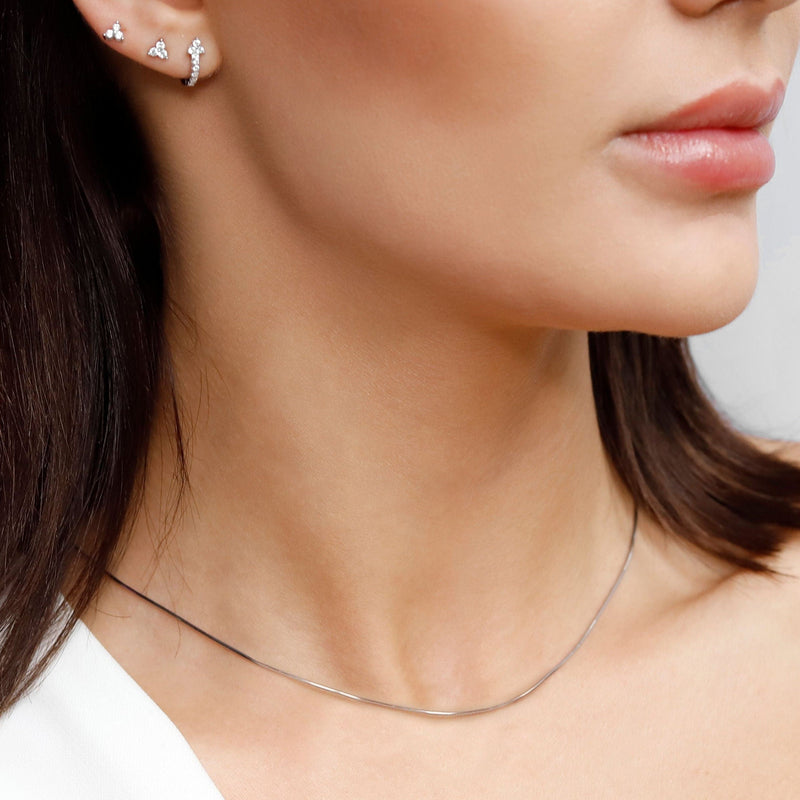
Alice Sterling Silver Huggie HoopsOpen sterling silver huggies in five graduated sizes (5 mm to 9 mm), in silver or gold tone. Our top pick for everyday wear.
View Alice hoops →

Joe Dainty 925 Silver StudsGenuine 925 sterling silver studs that are tiny, light and ideal for second or third lobe piercings.
View Joe studs →

925 Sterling Silver Knot HoopsCrafted from genuine 925 sterling silver with a sculptural knot detail. A dressier option that stays light.
View Knot hoops →

Pixie Bead Huggie HoopsClose-fitting bead huggies in 6 mm or 8 mm that sit snugly against the lobe.
View Pixie hoops →

ALINA Baguette CZ HuggiesBaguette cubic zirconia huggies that add sparkle without heavy drops.
View ALINA huggies →

BECKY Cartilage Huggie HoopsSlim, close-fitting hoops designed to sit flush on the lobe, helix or cartilage.
View BECKY hoops →

Which earring styles are kindest to sensitive ears?
| Style | Comfort for sensitive ears | Why |
|---|---|---|
| Tiny studs | Excellent | Minimal metal, minimal weight, nothing to snag |
| Huggie hoops (5–10 mm) | Excellent | Hinged closure, sits close to the ear, easy to clean |
| Small hoops (12–20 mm) | Good | Light, but more movement and friction |
| Drop and dangle earrings | Fair | Weight pulls on the piercing; wear for shorter periods |
| Large statement earrings | Lower | Heavy; often made from mixed metals |
How to care for earrings to prevent irritation
- Clean before first wear. Wipe posts with a little rubbing alcohol or warm soapy water and dry thoroughly.
- Keep them dry. Remove earrings before swimming, showering or exercise, since sweat and chlorine increase irritation.
- Clean weekly. Use mild soap, warm water and a soft brush, then dry completely. Read our step-by-step jewellery cleaning guide.
- Store separately. Use a pouch or lined box so plated finishes do not scratch.
- Give your ears a break. If you notice redness, remove the earrings, keep the area clean and let it settle. Persistent symptoms are worth discussing with a pharmacist or GP.
Frequently asked questions
Is sterling silver hypoallergenic?
925 sterling silver is a low-risk choice for most people with sensitive ears. It is 92.5% pure silver, usually alloyed with copper rather than nickel. Choose pieces that are batch tested for nickel release, because the alloy and any plating vary between makers.
Can I wear gold plated earrings with a nickel allergy?
You can if the plating sits on a nickel-safe base such as sterling silver (often called gold vermeil) and the piece has been tested. Gold plating over brass or unknown base metals can expose nickel once the plating wears.
What is gold vermeil?
Gold vermeil is a thick layer of gold over a sterling silver base. It is generally more durable than standard gold plating and safer for sensitive ears because the core is silver rather than base metal.
How do I know if earrings are nickel free?
Check that the base metal is named (for example 925 sterling silver or titanium) and look for evidence of nickel, lead and cadmium testing. A home nickel spot test (dimethylglyoxime) can also show whether a piece releases nickel.
Which earrings are best for a new piercing?
Implant-grade titanium or sterling silver studs with a flat back are best while a piercing heals. Avoid hoops and drops until it is fully healed, and follow your piercer's aftercare advice.
Key takeaways
- Choose 925 sterling silver, titanium or gold vermeil; avoid unnamed base metals.
- The post matters most: it must be nickel safe.
- Studs and huggies are the most comfortable styles for sensitive ears.
- Look for brands that batch test for nickel, lead and cadmium.
- Keep earrings clean and dry, and remove them if irritation starts.
Ready to find your pair? Browse our best-selling earrings or explore all huggie earrings.